
From heritage fermentations to standardized science.
Amara Restore draws inspiration from traditional fermented beverages made from bananas and millet across cultures around the world.
- MbegeTanzania
- UrwagwaRwanda
- AmbaliIndia
- BozaTurkey
- TongbaNepal
- DoloGhana and Burkina Faso
- UmqombothiSouth Africa
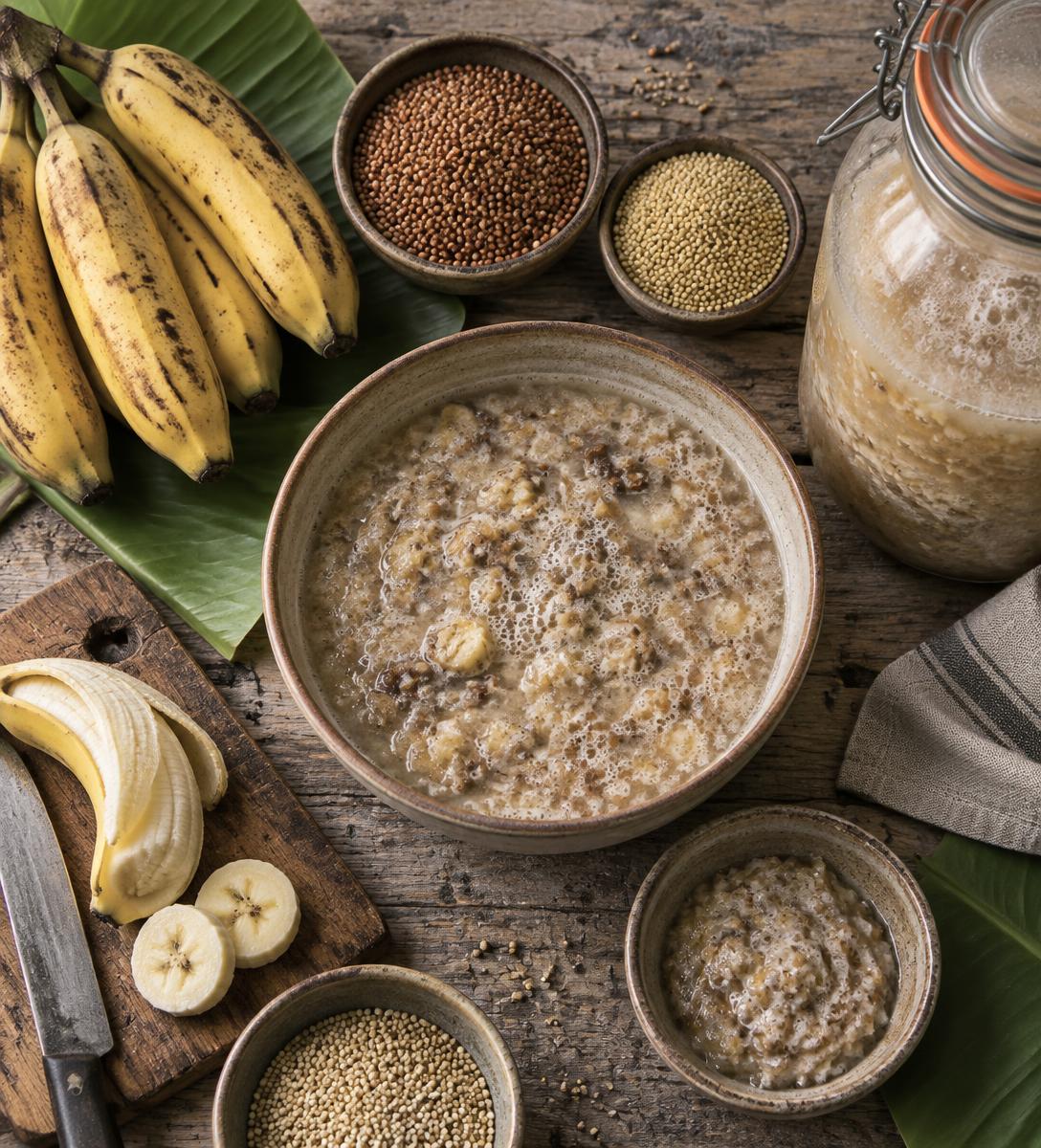
What is heritage fermentation?
Heritage fermentation is an approach to transforming food through the natural activity of diverse microbial communities, including bacteria and yeasts.
Many organisms. One living process.
Unlike industrial fermentation processes that focus on a single microbial strain or a specific end product, heritage fermentation embraces interactions among multiple microorganisms. As these microbes interact, they transform plant ingredients into a rich, complex matrix of organic acids, metabolites, and other fermentation-derived compounds.
At Amara Biosciences, we draw inspiration from traditional fermented beverages made with millet across cultures around the world. We combine the principles of heritage fermentation with modern scientific methods to develop a controlled, multi-kingdom fermented plant matrix.
We turn that tradition into a documented, measured process, so every batch can be characterized and compared.
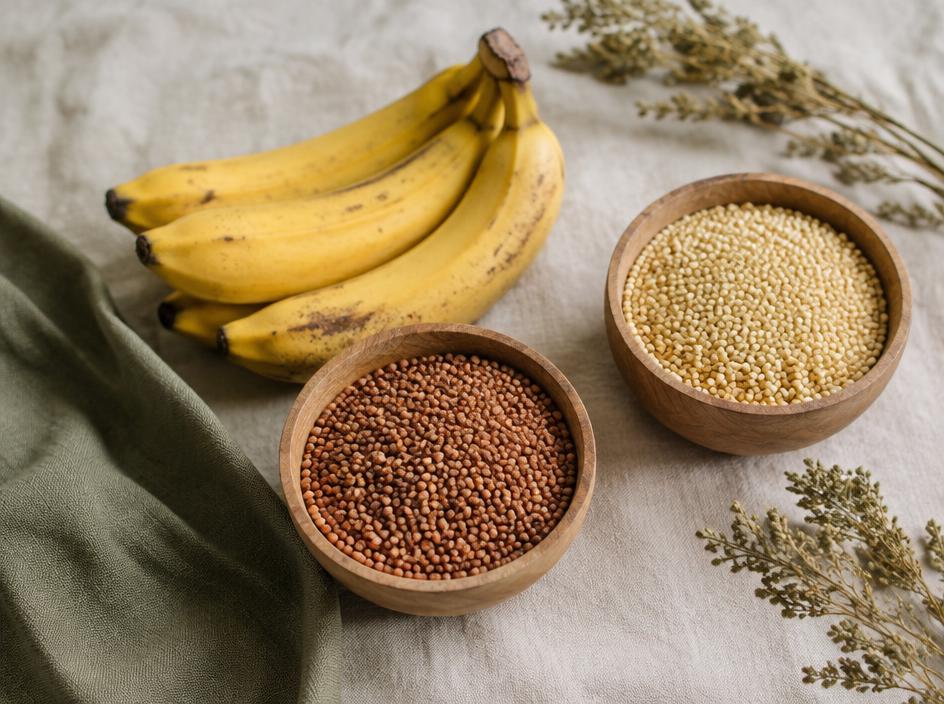
Select & prepare
Three ingredients: organic bananas, organic millet and water. Each is weighed, the fruit is checked for ripeness, and the millet is milled gently to protect its natural enzymes.
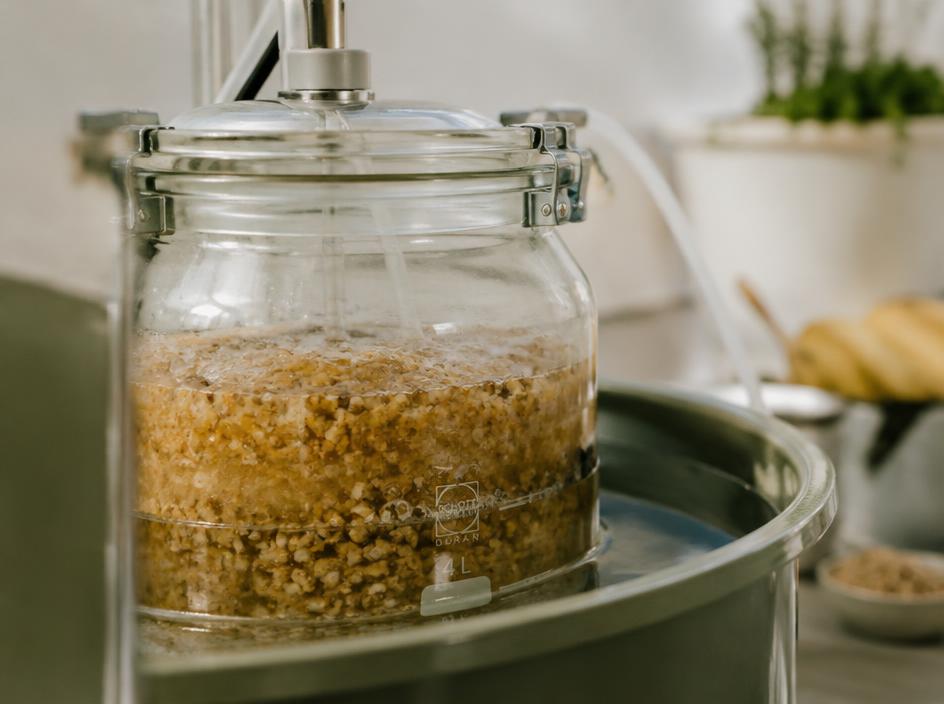
Ferment & monitor
The mash ferments in a warm, controlled bath. Amara’s proprietary fermentation approach is designed to optimize the lactic acid bacteria while balancing the yeast-dominant fermentation. We check acidity, sugars, temperature, and aroma at set times.

Stop & standardize
We halt fermentation, press, chill, and seal each batch in glass jars. Then we compare it with earlier batches, so every batch is consistent.
The Reality of Gut Complexity
Gut homeostasis depends on interconnected interactions among the intestinal microbiota, gut barrier, immune system, and host metabolism. Because these systems work together, targeting a single pathway may not address the full complexity of gut homeostasis.
Why One-Size-Fits-All Fails
No two gut ecosystems are exactly alike. Differences in microbial composition, metabolic activity, and host biology can influence how individuals respond to the same intervention.
Prebiotics are substrates selectively utilized by microorganisms, while probiotics deliver live microorganisms that confer a health benefit. Their effects can vary across individuals and health conditions.
The Amara Approach
Amara is taking a different approach. Rather than focusing on a single ingredient, microbial strain, or isolated pathway, we are developing Amara Restore as a multi-kingdom fermented plant matrix shaped by interactions among bacteria, yeasts, and plant ingredients.
Gut ecology operates as an interconnected system. So do we.
Microbial metabolism, gut-lining homeostasis, inflammatory regulation, and metabolic signaling are interconnected. Amara Restore is being developed as a complex fermented plant matrix, designed around this biological complexity rather than a single isolated pathway.
Microbial metabolism
Gut microbiota produce metabolites that serve as signaling and regulatory molecules across the body.
Gut-lining homeostasis
Microbial activity helps shape inflammatory processes in the tissues lining the gut, where controlled inflammation contributes to tissue homeostasis.
Inflammatory regulation
Diverse gut microbial populations are involved in regulating the onset and intensity of inflammatory processes in the gut.
Metabolic signaling
Gut microbiota-derived metabolites can influence immune, endocrine, metabolic, and nervous systems.
Our gut needs more fiber than we give it.
Fiber is the fuel that feeds the gut microbiome. Ultra-processed foods have left us undernourished in the fiber our gut needs, which contributes to gut imbalance. Fiber must also have the correct glycan shape to reach the colon, where gut bacteria live.
Fiber is the fuel that provides thermodynamic power for our gut bacteria. Amara’s fermentation matrix delivers more fiber so our gut bacteria work better.
From scientific foundation to a reproducible process and future pilot research.
Amara Biosciences products are currently in pre-clinical development; published research below is not clinical evidence for Amara Restore.
Scientific Foundation
A 2025 randomized controlled trial by Temba et al. investigated African heritage diets and Mbege, a traditional Tanzanian fermented banana beverage. The researchers observed changes in immune and metabolic profiles, including largely anti-inflammatory responses associated with the fermented beverage intervention.
Additional studies (Ofosu et al., 2023, Vila-Real et al., 2025, Tang et al., 2022) involving fermented sorghum and millet have reported changes in microbial metabolites and gut microbiota in experimental models.
These findings provide a scientific rationale for further investigation of fermented plant-based foods.
Amara’s Work
Amara is developing a controlled, lactic-acid fermentation process using three ingredients: bananas, millet, and water. Our goal is to develop a reproducible fermented plant matrix that can be characterized and evaluated.
Next Steps: Pilot Research
We are preparing for pilot studies to investigate Amara Restore’s tolerability and potential biological effects.
For clinicians & research partners
Help us build the evidence.
We welcome collaborations with clinicians, researchers, and academic institutions interested in advancing research on fermented plant matrices and gut and metabolic health.
Explore Research CollaborationFor individuals & consumers
Stay connected with Amara Restore.
Interested in learning more about our fermented plant matrix, research progress, and future product developments? We’d love to hear from you.
Register Your Interest